
Gravity Lines
Rider ProfileSnapshot
This guide helps you understand whether this experience fits you.
You are not riding trails built for bikes. You are riding paths that existed long before mountain biking arrived in the Andes. Many of our lines were shaped over centuries by indigenous communities, farmers, traders and herders moving through volcanic terrain at high altitude.
Before you ride
These are living paths, not built trails
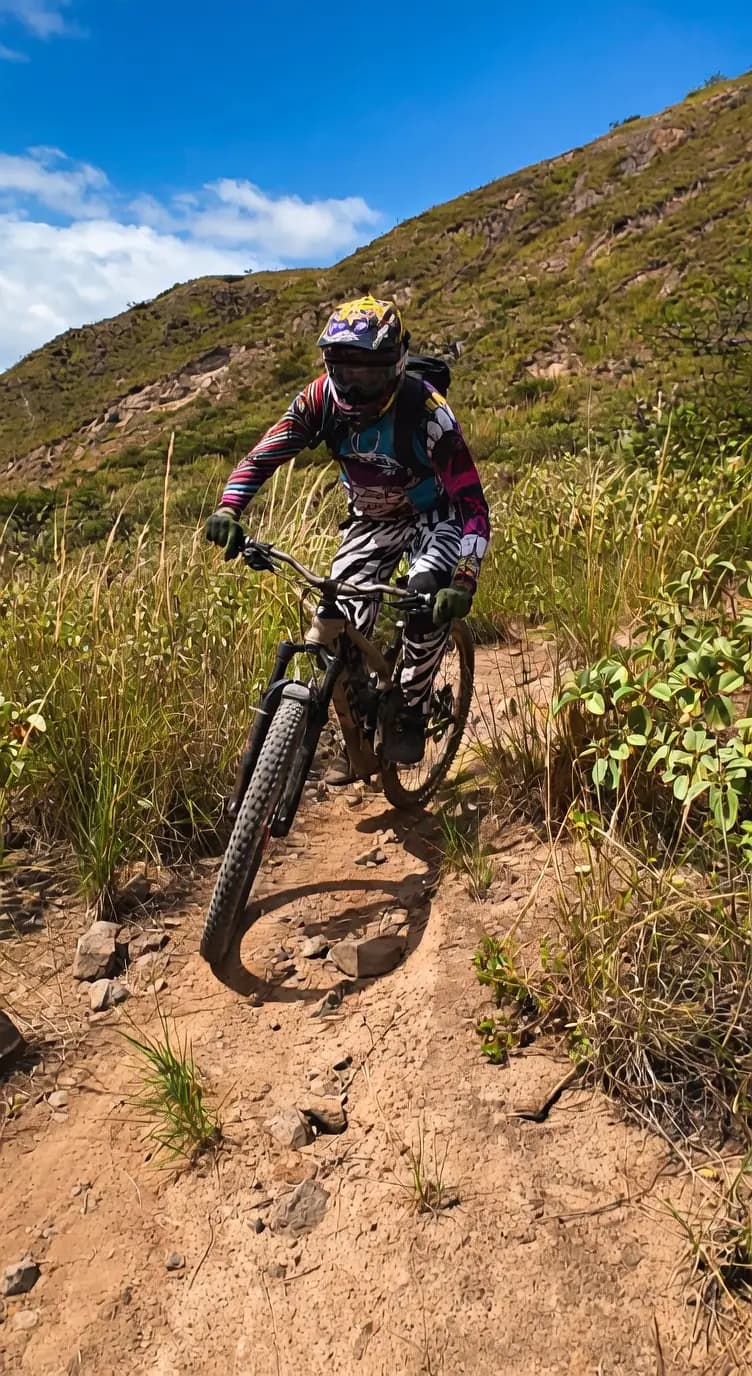
What we ride today are living paths — raw, natural, imperfect and deeply rewarding for riders who know how to move with the terrain instead of fighting it. This is not bike park riding. There are no machine-built flow trails or sculpted jump lines. The terrain is real: volcanic rock, loose dirt, rooted sections, cattle paths, off-camber corners, open hillsides and constantly changing surfaces shaped by weather and use.
Technical Level
These descents are designed for experienced riders comfortable on natural terrain. You don't need to be a racer or pro-level athlete, but you should already feel confident riding technical trails, managing loose surfaces, choosing lines dynamically and adapting when conditions change. Dry volcanic dirt can quickly turn into mud after rain, completely changing traction, braking points and line choice. If a section feels outside your comfort zone, there's no pressure to force it — walking a feature is always acceptable. The trails reward fluidity, balance and terrain awareness far more than uncontrolled speed.
Physical Demand
These are full days in the mountains at altitude, often in remote terrain far from urban infrastructure. Vehicle access is used to reach many starting points, but once on the trail riders should expect to remain self-sufficient until the extraction point. Some routes include pushing sections, uneven terrain, changing weather and long descents that require steady focus and energy. You don't need to be an endurance athlete — the goal is to stay comfortable, alert and capable of enjoying the terrain from beginning to end.
Altitude
Our routes operate from lower Andean elevations to high volcanic terrain above 4,800 m / 15,750 ft. Some experiences take place at moderate elevations, while others move deep into high volcanic terrain where altitude becomes a much bigger factor in breathing, recovery, hydration and energy. Altitude affects everyone differently, especially above 4,000 m / 13,100 ft. Riders who pace themselves well, stay hydrated and remain adaptable get far more out of the experience than those forcing intensity too early. On longer expeditions, the progression is structured to let riders adapt as elevations increase.
Recommended Bike Setup
A modern enduro bike is strongly recommended, ideally with at least 140 mm rear travel and 160 mm front travel. Some routes can be ridden on lighter trail bikes, but the terrain is better suited to stable, aggressive setups with strong brakes, quality suspension and aggressive tires for loose, variable conditions. A properly maintained bike is essential. Rental bikes may be available through local partners depending on availability, but riders should plan to bring their own protective equipment, including helmet and riding protection gear.
What This Is Not
This is not a beginner experience, and it is not a polished bike park environment built around perfectly shaped trails and predictable riding. It is also not about racing the clock or proving something to the group. Some riders move faster than others, and that is completely fine. The goal is to ride well, stay present and enjoy the mountains rather than force speed where it doesn't belong.
Who Belongs Here
You have experience riding technical terrain — through enduro, downhill, natural trails or years spent searching for raw lines beyond groomed bike parks. You enjoy reading terrain, adapting to changing conditions and finding flow in trails that were never designed to be predictable. If the idea of riding ancient volcanic paths shaped by generations of people moving through the Andes attracts you more than it intimidates you, you're probably the kind of rider who belongs here. You're not looking for perfect trails. You're looking for memorable ones.
— Compatibility profile —
How it fits your rider profile
Technical terrain
Natural technical trails with elevation changes and obstacles.
Loose & rocky
Comfortable riding on loose, rocky, uneven surfaces.
Changing conditions
Adaptability to weather and shifting conditions.
Bike handling
Control and precision on technical terrain.
Altitude exposure
Exposure and comfort at altitude.
Physical demand
Sustained effort across mountain days.
Remote exposure
Time and commitment in remote zones.
Who it's for
- Riders with experience on technical terrain.
- Comfortable on steep, loose, rocky and off-camber sections.
- Able to adapt to weather and changing conditions.
- Physically adaptable to riding at altitude.
- Looking for adventure and real mountains over perfect trails.
At a glance
- Technical demand
- Terrain roughness
- Condition variability
- Physical demand
- Altitude exposure
- Remote exposure
What to expect
Raw Andean terrain
Volcanic soil, erosion lines, rock, roots and natural singletrack.
Technical, intense descents
Steep sections that demand focus, control and good line choice.
Altitude
Rides above 2,500 m / 8,200 ft. Acclimatization is key.
Remote & authentic
We ride where few people go. Solitude and connection with nature.
This is NOT…
Not a bike park
No lift access, no groomed trails. This is natural terrain.
Not a race
It's not about speed. It's about riding.
Not for beginners
Prior experience on technical terrain is required — not pro level.
Not for show
The goal isn't to prove anything — it's to enjoy the mountains.
Ancient paths.Natural terrain. Real adventures.